

Looking for Something More?
New to Theosophy? Start here.
What brings you here today?
Simply begin with the question that brought you here.
A Welcome from Andrew Swaffield, President

You have found your way here. That suggests something.
Many people arrive at this page because they are searching.
Some are looking for a deeper understanding of life. Others are asking questions that conventional answers no longer seem to satisfy. Some simply feel that there must be more to life than everyday routine.
Theosophy does not ask you to adopt a particular set of beliefs. Instead, it invites you to explore life's deepest questions with an open mind, drawing on the wisdom found in many of the world's spiritual traditions while encouraging you always to think for yourself.
If something here resonates with you, I hope you will take a little time to explore further. Whatever your background or beliefs, you will be very welcome.
Andrew Swaffield
President
The Theosophical Society in England and Wales
Why am I here?
Simply begin with the question that brought you here.
What gives life meaning and purpose? Explore one of humanity's oldest questions.
Every generation has asked this question.
Is human life simply a product of chance, or does it have a deeper purpose?
Theosophy suggests that each human being is far more than a physical body or a passing personality. At the heart of every person lies an enduring spiritual nature that gradually unfolds through the varied experiences of life.
From this perspective, life is not something that simply happens to us. It is a journey of learning and growth that may continue over many lifetimes.
Our successes and failures, our joys and disappointments, our relationships and responsibilities all contribute to our development of wisdom, compassion and understanding.
Theosophy does not ask you to accept this as a belief. Rather, it invites you to explore whether this understanding helps to make sense of your own experience.
* * * * * * * * * *
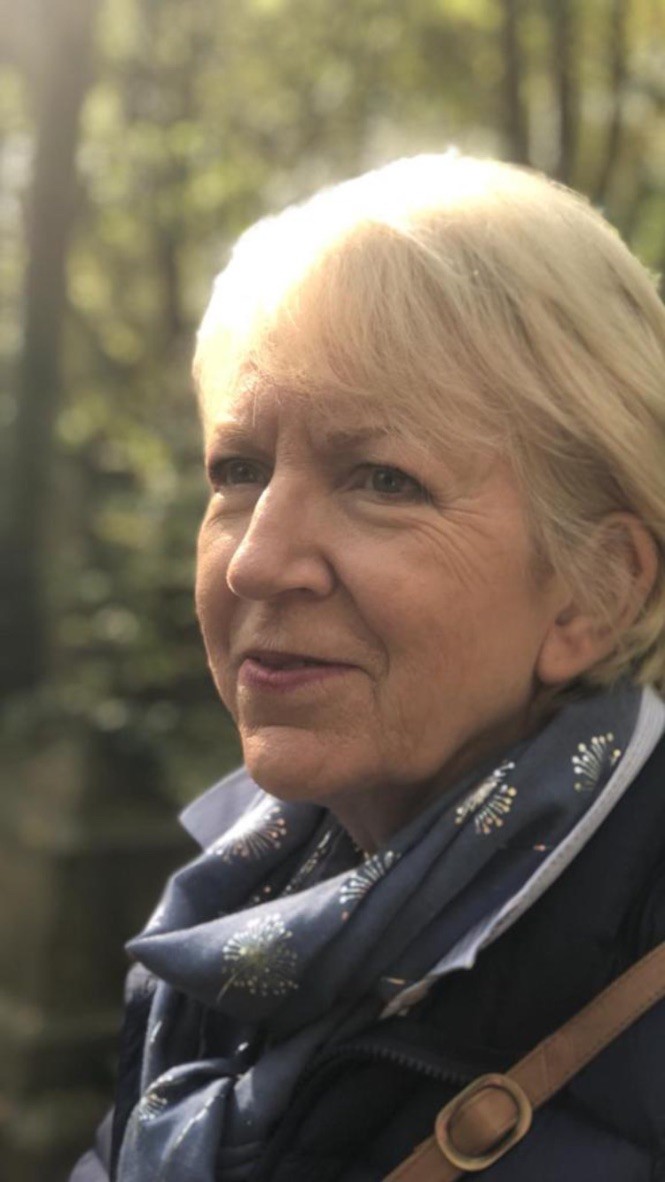
Finding theosophy – Kate
Finding Theosophy has been to me an awakening, a homecoming, an elucidation, a means of making sense of a hitherto chaotic and bewildering view of life. How refreshing to find people, many of whom had previously struggled, as I did, with the bigger questions, only to find very limited and unsatisfactory answers within religion before finding this Ageless Wisdom.
How amazing and comforting to know that the Masters have trodden these paths before us, leading the way and setting down an outline map in the form of the great laws to guide us, although each of us will have a different road to follow. More amazing still is the knowledge that from the depths of physicality in which we find ourselves currently, after many more incarnations (opportunities to develop and perfect), we will return spiritually aware to source, to Spirit - a spark of the Divine reuniting with the Flame.
Kate Fletcher
Is there more to life than this?
Many people sense that everyday life is just aspect of deeper reality. Discover why human life has a spiritual purpose.
Many people reach a point where they feel that something is missing.
Life may be busy and successful on the outside, yet questions remain:
Is this all there is?
Theosophy suggests that this feeling is not unusual.
Throughout history, people have sensed that beneath everyday experience lies a deeper, more fundamental reality.
Moments of beauty, wonder, love, silence and selflessness often hint that life is richer than it first appears.
Rather than asking us to escape the world around us, Theosophy encourages us to understand it better and to recognise our place within the greater whole of life.
Why do people suffer?
Does suffering have meaning? Explore the ideas of karma, compassion and spiritual growth.
Suffering is one of life's greatest mysteries.
Why do good people experience hardship? Why do some lives appear easier than others?
Theosophy approaches these questions through the ideas of karma and spiritual evolution.
Karma is not punishment. It is the principle that every thought, action and choice has consequences. Through these experiences we gradually mature and grow, learning lessons along the way that may benefit us in future lifetimes.
This understanding does not remove suffering, but it may help us see it differently - not as meaningless, but as part of a larger process of spiritual development.
At the same time, Theosophy reminds us that compassion is always the best response to suffering, whether our own or that of others.
What happens after we die?
What do the world's wisdom traditions - and Theosophy - tell us about life beyond death?
Few questions are more universal.
One of the central ideas of Theosophy is that consciousness survives physical death and that life continues beyond a single earthly existence.
Many spiritual traditions express similar ideas in different ways.
Theosophy also teaches reincarnation: the view that each life forms part of a much longer journey of experience, learning and spiritual evolution.
Whether or not one accepts these ideas, they encourage us to view life from a much wider perspective and to recognise that our present choices have lasting significance.
* * * * * * * * * *
I am not fearful of death…
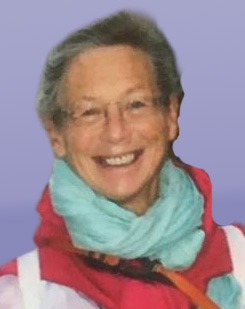 The most important aspect of my life assisted by Theosophy is death and dying. It also enables me to better accept the apparent unfairness of many situations around me together with the wider world The broad spiritual perspective of theosophy gives me a sense of 'place' - like a big arrow saying 'You are here' in the great scheme of things.
To me it gives purpose and a meaning to life.
Due to the core teachings of reincarnation and karmic law I am not fearful of mine nor my family and friend's deaths. I am currently dealing with a sudden and unexpected death. I was blessed by being present at the end - am absolute privilege. Four days later a very good friend's Mother died and was able to be there for her without fear or anxiety and gave her the strength to get through the immediate after death stage.
Knowing I am spirit rather having a spirit is also extremely significant for me in how I make sense of the world. It helps me keep my balance at challenging times.
Romey Barnes
How can I find greater inner peace?
Discover practical approaches to meditation, self-understanding and living with greater awareness.
Life today is busy, noisy and often distracts us from the things that really matter.
Theosophy encourages us to develop an inner life alongside our outer, worldly responsibilities.
This may include:
- quiet reflection
- meditation
- self-observation
- learning to respond rather than simply react
- cultivating compassion
- living with greater awareness
Inner peace is not seen as escaping the world, but as learning to meet the challenges of life with greater wisdom, balance and kindness
How can I become a better person?
Theosophy is not simply about ideas; it is about developing wisdom, compassion and self-understanding, with practical results in everyday life.
One of the central aims of Theosophy is self-transformation.
Knowledge is only truly valuable when it helps us to improve the way we live.
Theosophy encourages us to become:
- more compassionate
- more truthful
- more patient
- more courageous
- more understanding
- more aware of our true motives
- more willing to serve others
Spiritual growth is not measured by unusual experiences, but by the gradual development of character.
* * * * * * * * * *
Frank - a Personal View
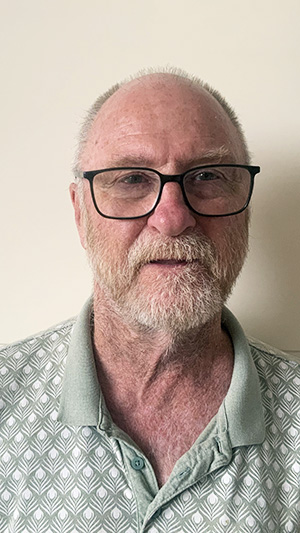 I am a 73 year old retired Consultant Psychiatrist and am fairly new to Theosophy, having discovered it only 4 years ago. I was brought up and educated as a Roman Catholic. I was initially concerned that Catholicism and Theosophy might not sit well together but I have found the reverse to be true. Theosophical teaching encapsulates the Ageless Wisdom, which itself underpins the doctrines of all the world’s major religions. However, this is only true at an esoteric or inner level but not in their exoteric or outer forms.
The biggest question of all is surely “ What is Mankind’s destiny ?” I have never accepted that we undergo total annihilation at death. Equally unacceptable to me is the exoteric Christian teaching that we have only one life, after which we face a “final judgement” on how we lived this one life, before being rewarded with eternal bliss or sentenced to eternal suffering. The only credible and just answer to the question of what happens to us at death is that contained in the twin theosophical pillars of Karma and Re-Incarnation, the bedrock of theosophical teaching.
We are given limitless opportunities to grow spiritually through repeated re-birth, but at the same time, paying all due moral debts that we incur in our lives by selfish thoughts, words and deeds via the great Law of Karma, that of Universal Justice. We reap what we sow. We, and we alone, are responsible for our actions and that is as it should be.
Frank McManus
Is there a common wisdom behind all religions?
Explore the shared truths that unite the world's great spiritual traditions.
The study of the world's religions, philosophies and sciences has always been important in theosophy.
It suggests that beneath their differences lie many shared insights about human nature, moral and spiritual development.
For this reason, theosophists come from many different religious backgrounds—and from none.
Theosophy asks no one to abandon their own beliefs.
Instead, it encourages respectful enquiry and a search for the truths that unite rather than divide humanity.
What is Theosophy?
New to the subject? Learn about Theosophy’s meaning and core principles.
The word Theosophy means "Divine Wisdom".
It refers to a body of spiritual philosophy that explores the nature of life, consciousness and human development.
Theosophy is not a religion.
It has no creed that members must accept.
Instead, it encourages freedom of thought, open enquiry and the search for truth wherever it may be found.
Among its central ideas are:
- the unity of all life
- the spiritual nature of human beings
- the law of karma
- reincarnation
- self-transformation
- universal brotherhood
- service to humanity
These are not presented as dogmas, but as ideas to explore, test and reflect upon in the light of personal experience.
Whether you remain simply curious or decide to continue the journey, we hope these pages have helped you discover something of what Theosophy seeks to offer.
Where next?
If these pages have raised new questions or sparked your interest, there are many ways to continue exploring.
You might like to: